

A Premium Brand that needed premium results
BlackMask Products came to MHT Media without a site that matched its premium positioning. We built the CRO infrastructure, ran 13 experiments, and established the conversion foundation needed to grow, all while the brand was actively scaling.
01 — Overview
A DTC Grooming Brand Without a Brand-Grade Store
Brand
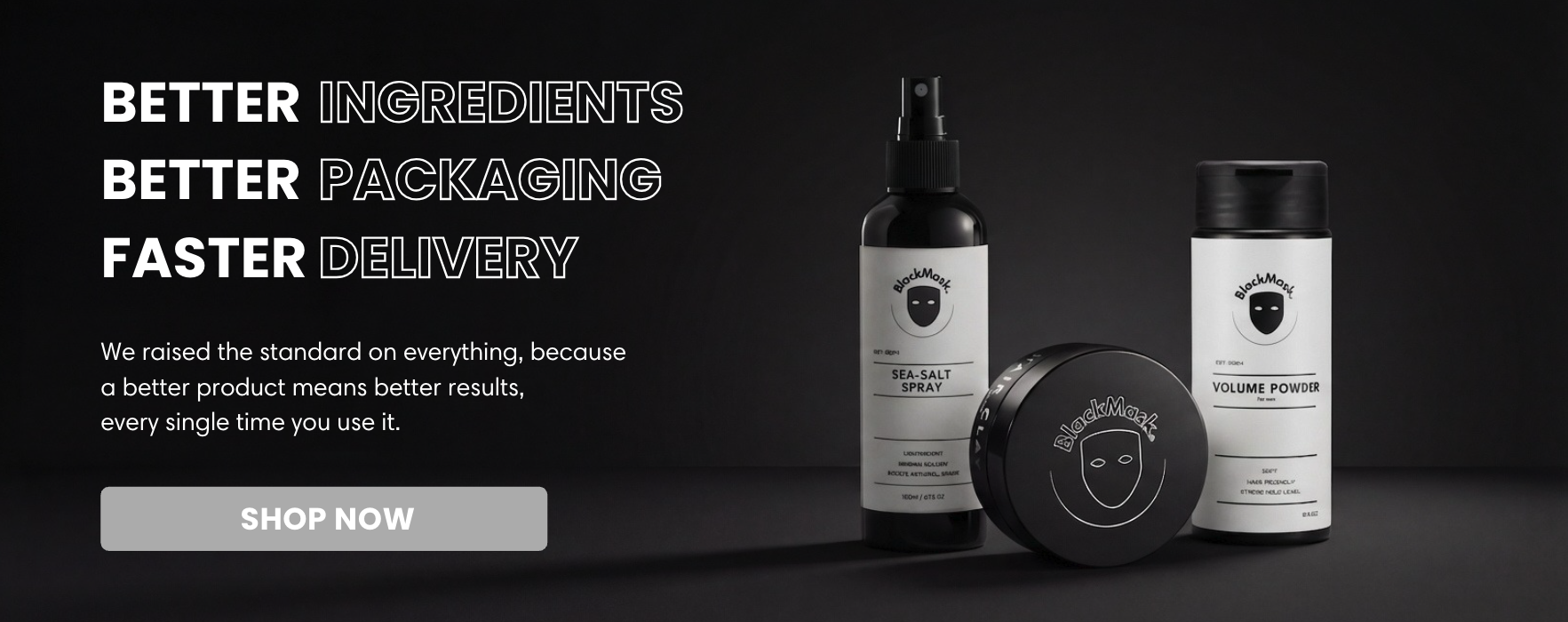
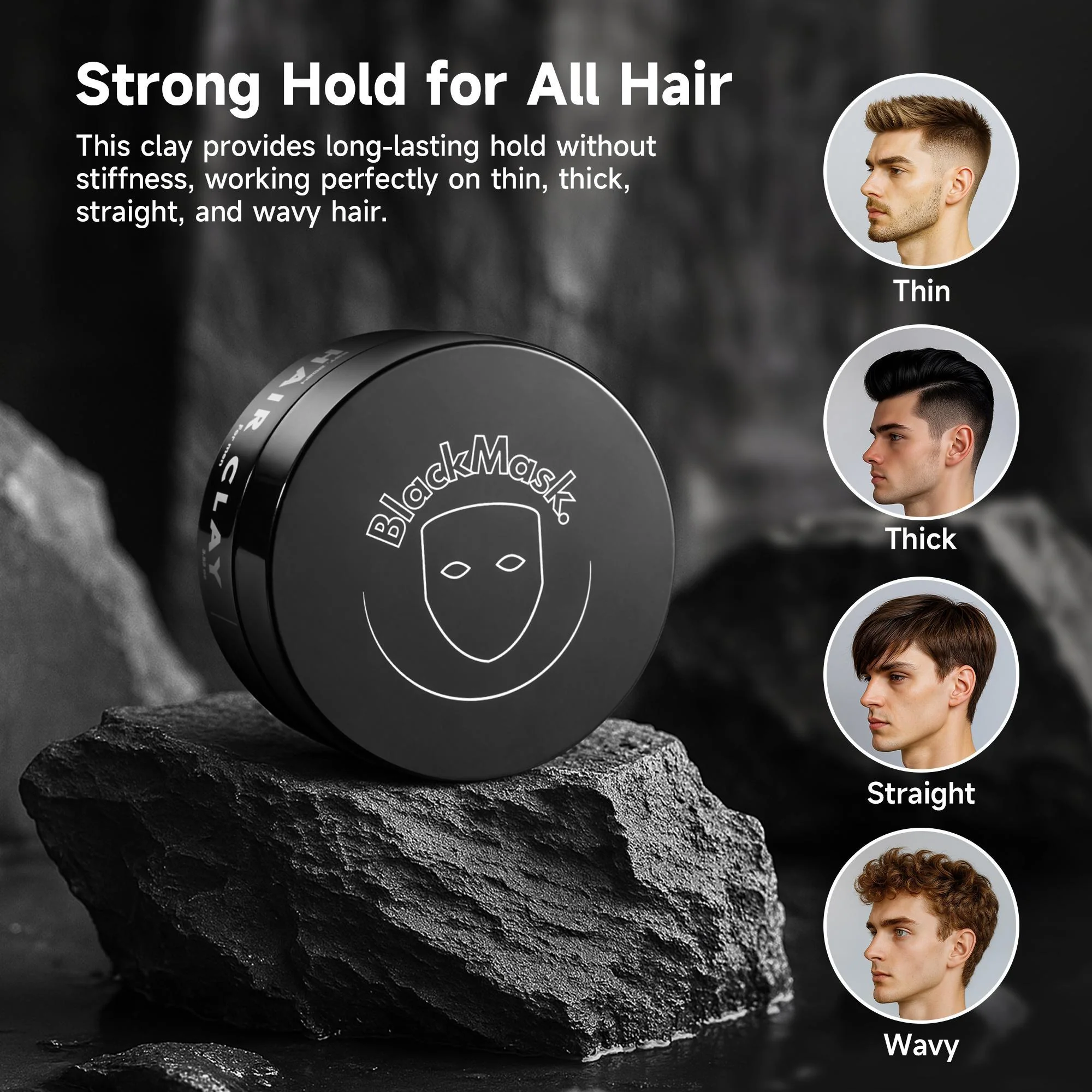
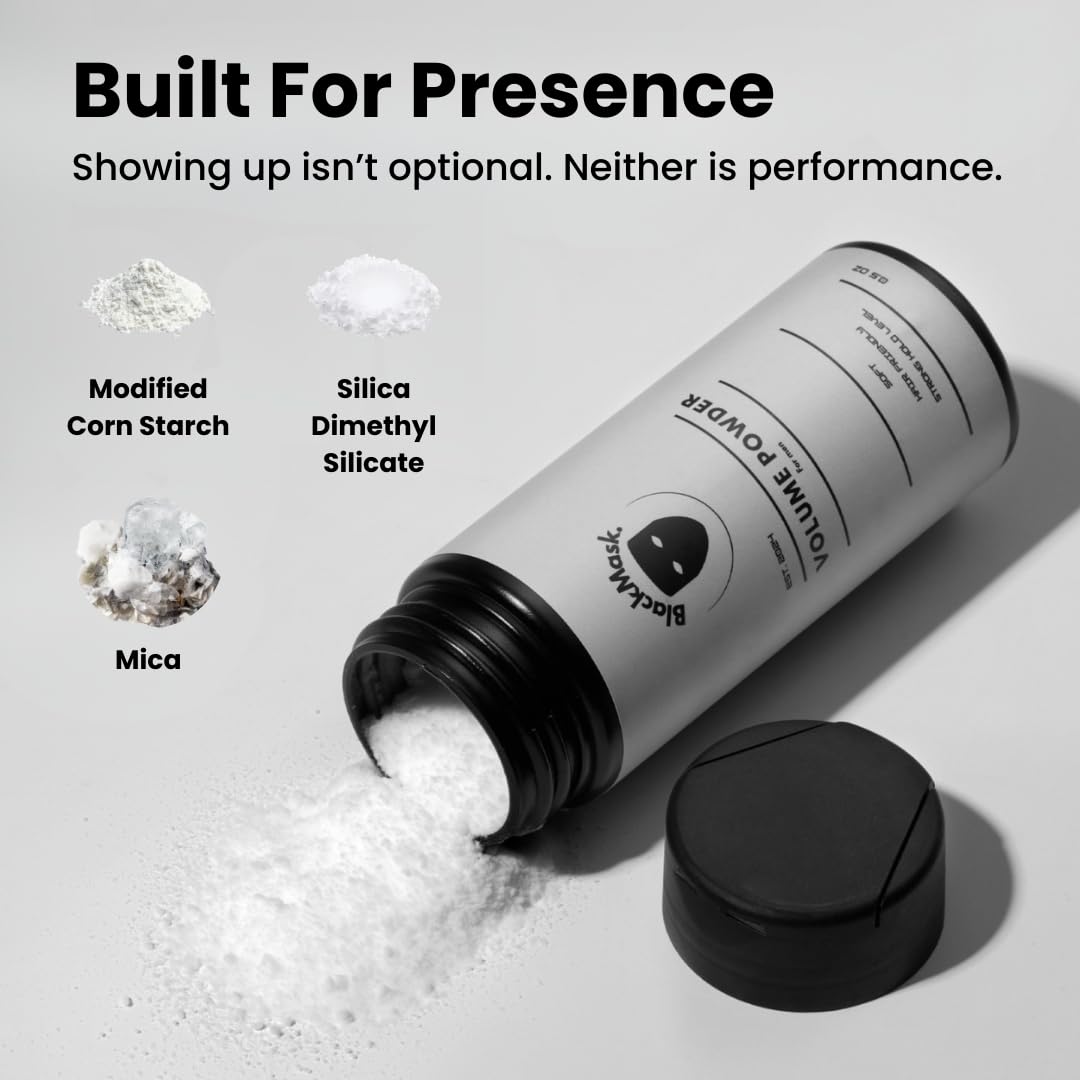
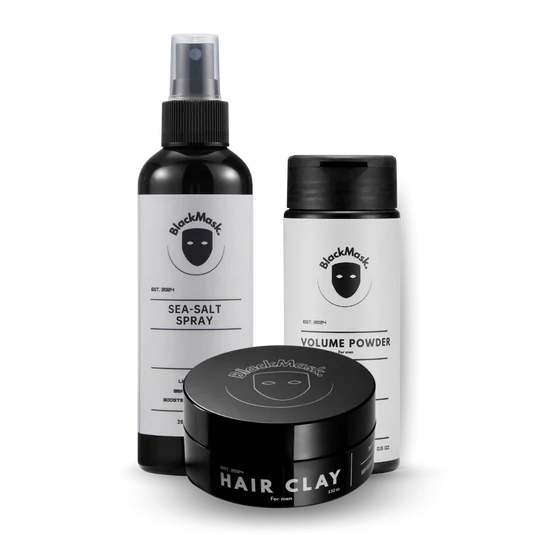
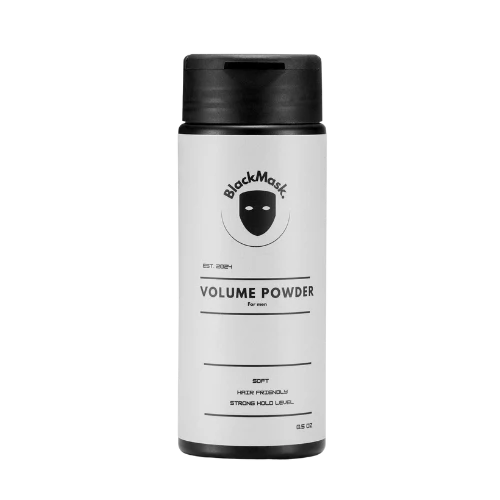
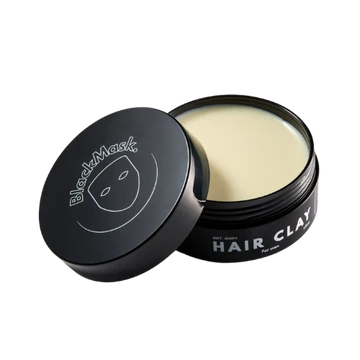
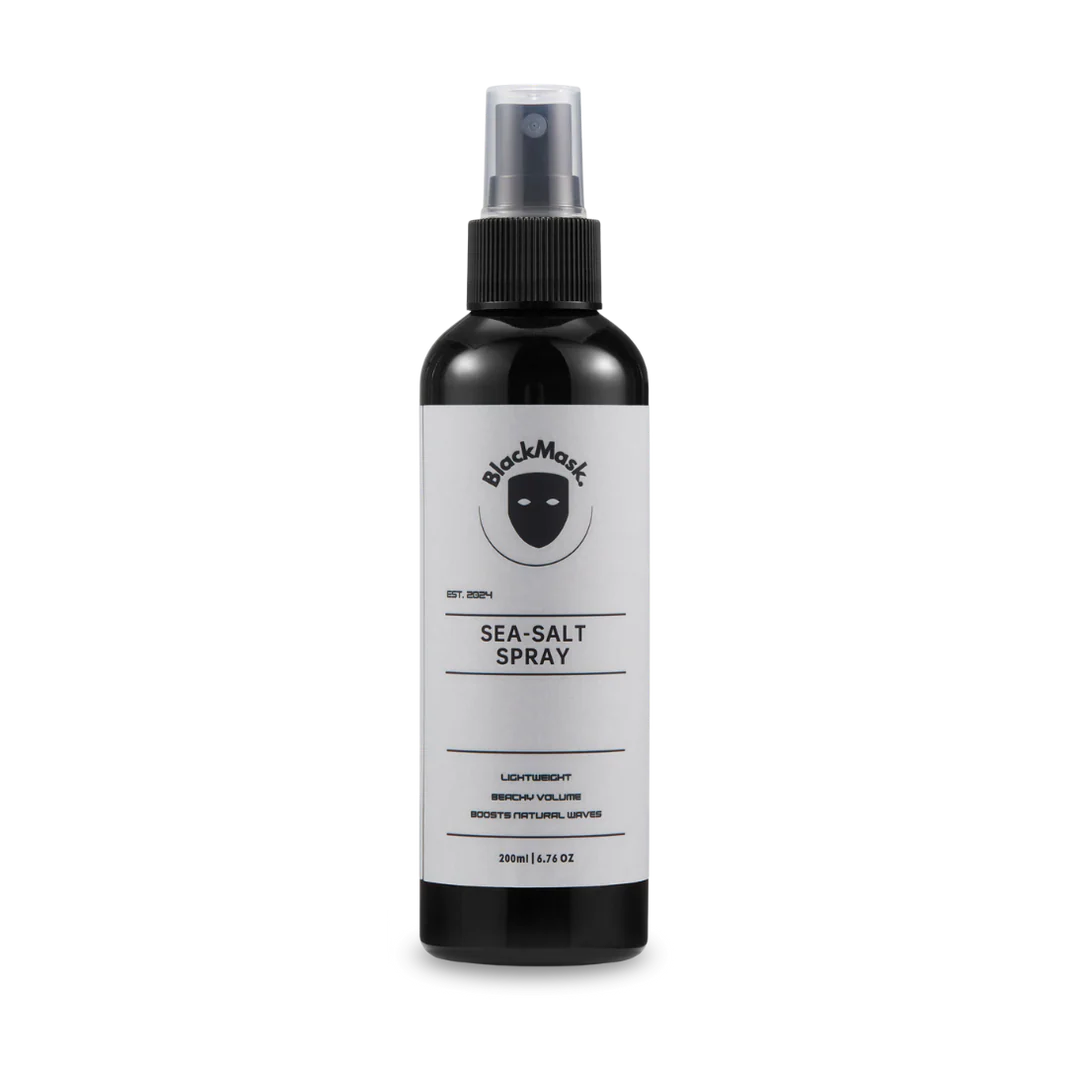
BlackMask Products - men's hair styling. Core lineup: Volume Powder, Texture Powder, Sea-Salt Spray, Hair Clay 2.0. Sold DTC via Shopify and on Amazon.
Tech Stack
Shrine Pro (Shopify). Intelligems (A/B testing), AfterSell (post-purchase upsells), Judge.me (reviews), Shopify Markets (international).
Audience
Primary: males 14–25 (identity-driven, status-conscious). Secondary: parents buying for sons - approximately 65% of Amazon revenue. Positioning: presence, not self-improvement.
Engagement Scope
Ongoing CRO management, non-CRO Shopify support, post-purchase upsell architecture, review migration, and international market expansion (AU, PL).
02 — The Challenge
Strong Product. Site That Didn't Match It.
BlackMask had built a strong following through product education and viral TikTok content, but the website was never built to convert at the level the brand had grown into. The store still felt like an early-stage Shopify setup that had not evolved alongside the business.
The messaging leaned heavily on ingredients and tutorials. That worked for initial acquisition, but it was not enough to build a durable brand identity or support a predictable conversion rate. Key conversion drivers like trust signals, shipping transparency, upsell logic, and post-purchase flows were either missing, inconsistent, or improperly configured.
The technical environment added another layer of complexity. Shopify Markets and Intelligems introduced strict constraints across the storefront, meaning any experiment or copy change tied to market-specific conditions had to be implemented carefully. Even small updates to pricing, cart messaging, or announcement bars carried the risk of breaking international storefront logic or invalidating active test assignments. Every CRO decision had to account for those dependencies.
The engagement began with stabilization. Broken experiences were fixed, misleading UX patterns were cleaned up, and foundational conversion issues were addressed first. From there, the project evolved into a structured experimentation program focused on improving conversion rate, increasing average order value, and building a more scalable customer journey.
No shipping confidence layer. Cart lacked a free shipping progress bar. A flat-rate structure existed but was invisible to shoppers.
PDP image and layout problems. Banners cluttered product imagery. Ingredients section broken on mobile. A prior thumbnail test had failed — wrong variable being tested.
Post-purchase upsells unconfigured. AfterSell was installed but lacked structured logic. Single-product and multi-product buyer flows were identical.
Review gap on PDPs. Strong Amazon social proof for Sea-Salt Spray wasn't being leveraged on-site at all.
Site integrity issues. Contradictory policies, false urgency mechanics, outdated copy, and mobile bugs - all requiring resolution before CRO could generate clean data.
03 — CRO Experiments
Every Experiment. Every Learning.



04 — Strategic Decisions
Solutions Built Around the Constraints
Several of the most impactful decisions in the engagement weren’t A/B experiments - they were architectural choices that removed friction from the store’s foundation and unlocked future CRO opportunities.
Free Shipping Progress Bar
Rather than using a third-party app (incompatible with Shopify Markets), the progress bar was custom-coded into the theme using Shopify.currency.active and Shopify.currency.rate globals. Multi-currency by design, no app dependency, no market conflicts. Cart drawer copy stays generic; US-specific shipping claims live in the announcement bar only.
AfterSell Upsell Architecture
Post-purchase flow structured as a branching logic tree: single-product buyers see a complementary product pairing before being offered the full bundle. Multi-product buyers go straight to the bundle offer. AfterSell metadata cleanup was correctly identified as expected platform behavior, preventing unnecessary developer investigation time.
Amazon Review Migration
Amazon reviews imported to the Sea-Salt Spray PDP via Judge.me CSV with placeholder domain emails. CSV imports don’t trigger outbound email, keeping the approach clean. Imported reviews carry a “not verified” badge — an acceptable tradeoff for meaningful social proof density on a product with limited on-site review history.
05 — What Was Shipped
From Triage to a Running CRO Engine
Flat-rate shipping setup, hero image creation, Hair Clay 2.0 ingredient updates, policy corrections, AfterSell migration, price corrections, Shopify Markets expansion (AU, PL), mobile bug fixes, product card hover behavior, international currency display, and more.
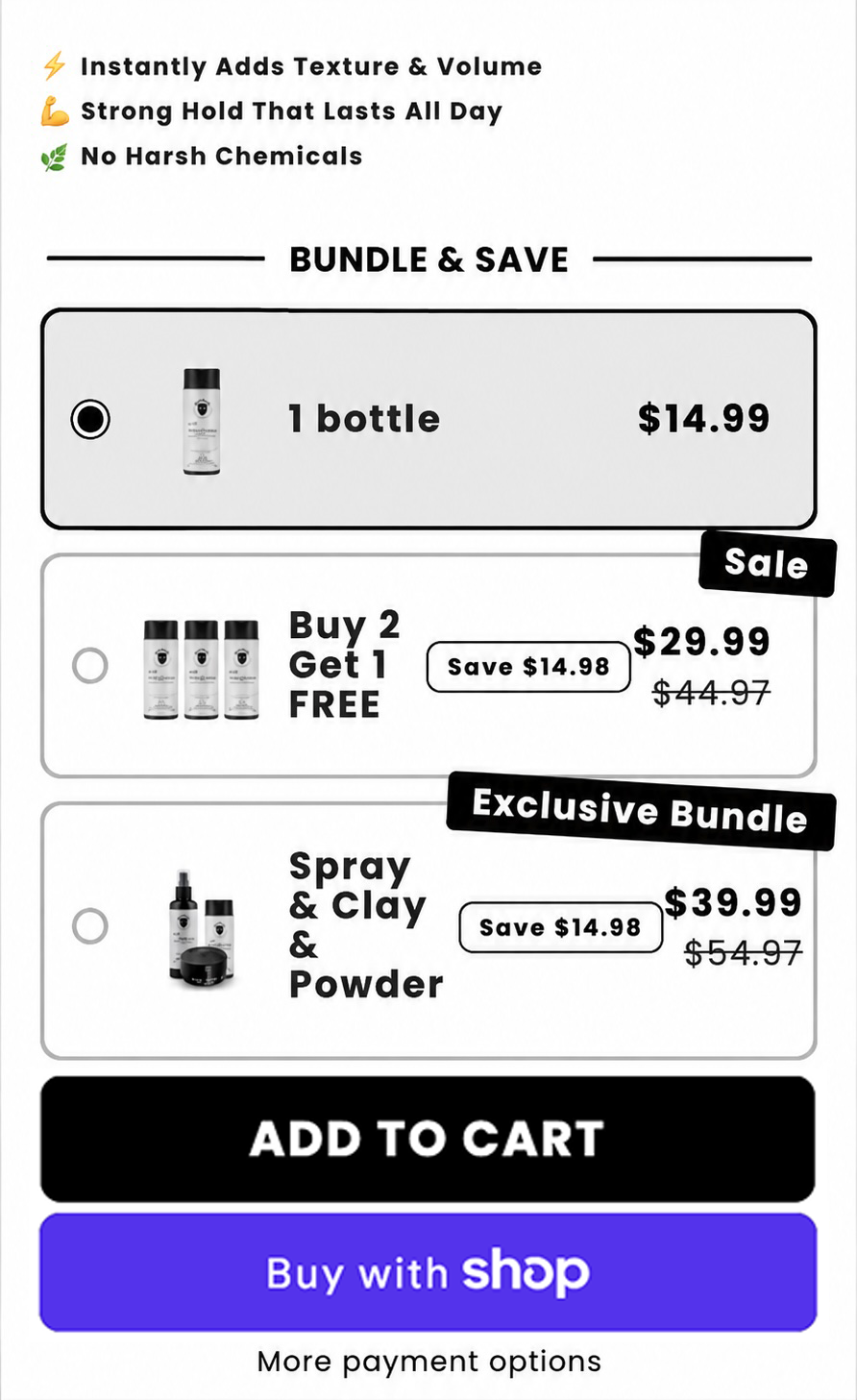
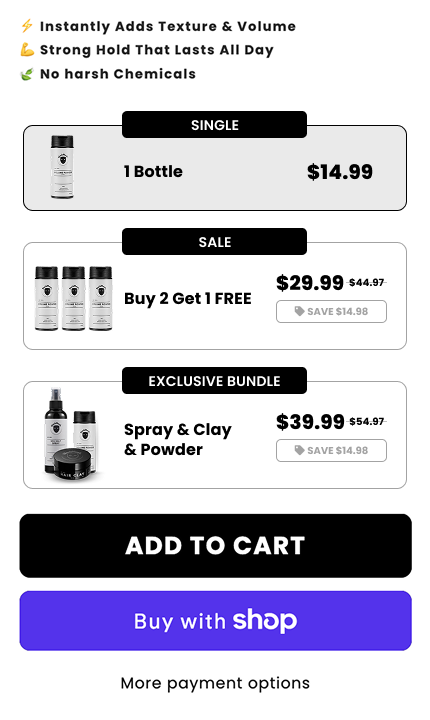
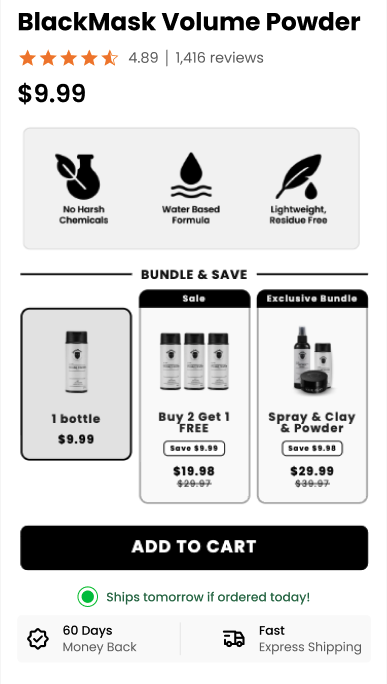
5 winners promoted to permanent implementations. 4 losers that generated clear directional learnings. 2 inconclusive results that iterated into other work. 2 currently active. All hypotheses and results tracked in ClickUp.
Multi-currency free shipping progress bar, custom coded into the theme without a third-party app, using Shopify’s native currency globals. Compatible with Shopify Markets, tested across USD and international currencies.
06 — Key Learnings
What the Data Taught Us
Reduce Friction, Don’t Just Add Features
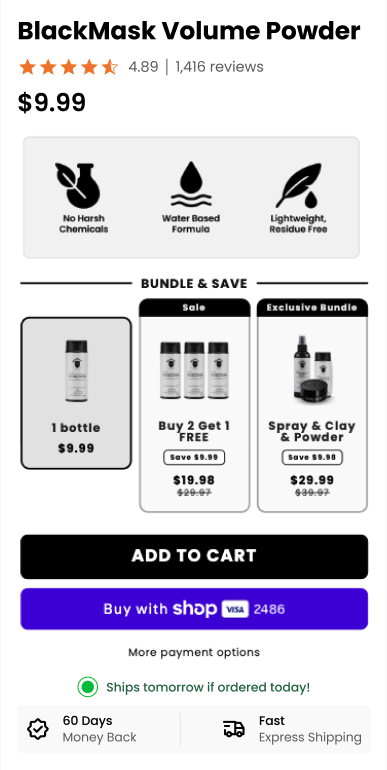
The two biggest winners, the Shop Pay shortcut and trust badges at checkout, weren’t about adding more content to the page. They were about removing steps and doubt at the exact moment a shopper decides whether to complete a purchase. The cleaner the path to payment, the higher the conversion.
Test Content, Not Controls
Both the mobile thumbnail test and the PDP section redesign lost, not because the concepts were wrong, but because navigation UI and layout restructuring are weaker levers than image quality and what’s actually shown. Subsequent direction shifted to image content and sequencing rather than the controls around them.
Flat-Rate Shipping Unlocks AOV Levers
Implementing a $10 flat / free over $35 structure had dual CRO value: it eliminated shipping calculation anxiety at checkout, and it enabled the free shipping progress bar as an AOV driver in the cart, a lever that wasn’t possible with variable shipping rates.
The Intelligems × Shopify Markets Constraint
Any experiment touching copy or pricing that varies by market cannot use Intelligems without breaking test assignments. Market-scoped Liquid conditions are also ruled out as a workaround. This constraint governs the entire testing architecture for this store and must be accounted for in every future experiment design.
“You guys are doing great. Super helpful and honestly above and beyond. Couldn’t really ask for more to be honest.”
Founder, BlackMask Products
Are you ready to take your brand's revenue next level?
Let's talk!